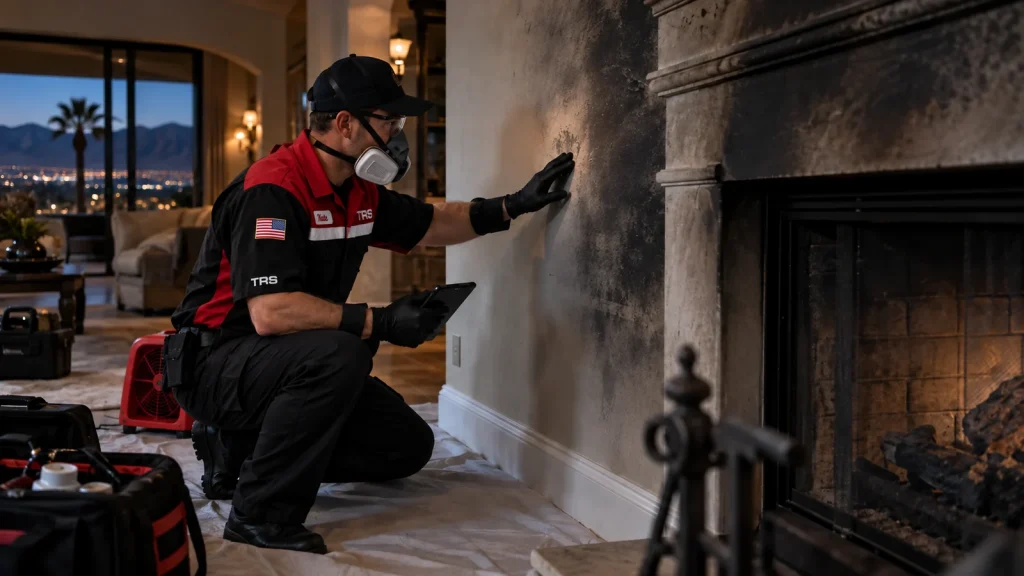
When a fire is extinguished, the visible flames may be gone, but the damage is not finished. Smoke and soot can travel through doorways, ventilation paths, ceiling spaces, and tiny openings, leaving residue far beyond the room where the fire began. The result may include staining, persistent odor, corrosion, and damage to finishes or belongings.
Professional smoke cleanup is not simply a deeper version of normal housecleaning. The residue left behind can vary by what burned, how hot the fire became, and how air moved through the building. The wrong product or technique can smear soot, set a stain, or push odor deeper into porous material.
Smoke residue is not all the same
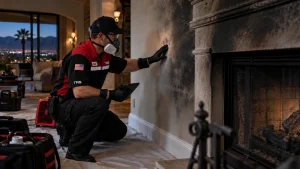
A slow, smoldering fire may create a sticky, fine residue that is difficult to remove from fabrics and textured surfaces. A hotter fire may leave a drier powder that spreads easily when disturbed. Cooking oils, plastics, synthetic materials, wood, and building finishes can each produce different soils and odors.
Before cleaning begins, a restoration professional evaluates the affected rooms and tests representative surfaces. The goal is to select a method that removes residue without unnecessarily damaging paint, metal, stone, wood, textiles, or electronics.
Why wiping soot can make the problem worse
A damp cloth and general-purpose cleaner may seem like a reasonable first step, but moisture can drive some soot into paint or drywall. Aggressive scrubbing may scratch a finish or leave permanent streaks. Moving through affected rooms without controlling dust can transfer residue to clean areas.
Professional teams normally work from a documented scope. They may establish cleaning zones, use suitable dry or wet cleaning methods, protect unaffected areas, and sequence the work so residue is not repeatedly spread through the building.
Odor removal starts with removing the source
Air fresheners and fragrance sprays may temporarily mask smoke odor, but they do not remove the particles and damaged materials producing it. Effective odor control begins with identifying and cleaning or removing the source. That may include affected contents, insulation, porous finishes, or hidden areas that received smoke.
After source removal and detailed cleaning, specialized deodorization methods may be used for the remaining conditions. The correct approach depends on the building, the materials involved, occupancy, and the extent of the loss. There is no single treatment that is appropriate for every property.
Contents need individual attention
Furniture, clothing, documents, artwork, electronics, and household goods respond differently to heat, water, smoke, and cleaning products. Some items can be cleaned on site. Others may need to be carefully inventoried, packed, transported, and treated in a controlled environment.
Do not power on electronics that were exposed to heavy smoke, heat, or firefighting water until they have been evaluated. Fine residue can affect internal components, while moisture may create an electrical hazard.
Early action helps limit secondary damage
Soot can react with metals, glass, stone, and other surfaces over time. Prompt evaluation helps identify items that should be stabilized or cleaned first. It also gives the property owner a clearer plan for temporary protection, contents handling, structural cleaning, repairs, and documentation.
What property owners can do safely
- Wait for the fire department or appropriate authority to confirm that re-entry is permitted.
- Avoid touching soot-covered walls, ceilings, or furnishings with bare hands.
- Limit movement between affected and unaffected areas.
- Photograph visible damage without disturbing the scene unnecessarily.
- Contact a qualified restoration provider before attempting broad cleaning.
A coordinated path from cleanup to recovery
Fire restoration may involve emergency board-up, water extraction, smoke and soot cleaning, odor control, contents services, and repairs. Coordinating those steps helps prevent gaps between mitigation and reconstruction and creates a more understandable recovery process for the property owner.
Trademark Restoration Services assists Southern Nevada homeowners and businesses with fire and smoke damage cleanup, contents care, odor removal, and property restoration. For an urgent assessment, call (702) 749-9999.