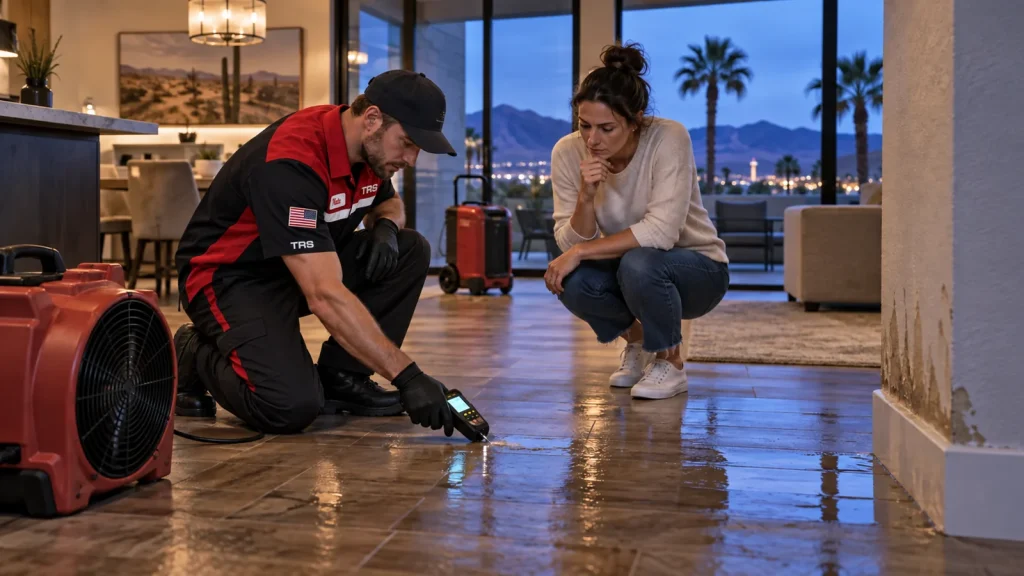
Water damage moves quickly. A supply-line break, appliance leak, overflowing fixture, or storm-related intrusion can spread beneath flooring and into walls long before every wet area is visible. What happens during the first day can make a meaningful difference to the safety of the property and the amount of material that may be saved.
If water is entering your Las Vegas-area home or business, focus first on people, electricity, and stopping the source. Then document the damage and begin professional drying as soon as it is safe to do so.
1. Protect people before the property
Do not enter standing water if it may be in contact with electrical outlets, appliances, extension cords, or a service panel. If water is coming through a ceiling, keep clear of the affected area because saturated drywall and insulation can become unstable.
Water from a clean supply line is different from water that has passed through a drain, toilet, exterior flood, or contaminated area. Avoid direct contact with questionable water and keep children and pets away until the area has been assessed.
2. Stop the source when it is safe
Shut off the nearest fixture valve for an appliance or plumbing connection. For a larger leak, use the property’s main water shutoff if you know where it is and can reach it safely. If the source is a roof, exterior wall, or another condition that cannot be stopped immediately, move unaffected belongings away from the active water path without putting yourself at risk.
3. Call for a professional water-damage assessment
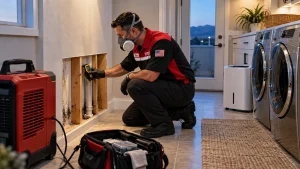
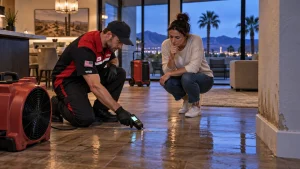
Visible water is only part of the problem. Moisture can travel behind baseboards, under floating floors, into carpet padding, through cabinet toe-kicks, and inside wall cavities. A restoration professional can use moisture meters and other inspection tools to map the affected area and plan extraction and drying.
Fast action is especially important in Southern Nevada because air-conditioned interiors and enclosed building cavities can still retain moisture even when the outdoor climate feels dry. A surface that looks dry may not be dry underneath.
4. Document the loss before moving too much
Take clear photos and short videos of the source, affected rooms, water lines, damaged materials, and impacted belongings. Make a simple list of items that were wet or moved. If emergency work begins before an insurance inspection, keep invoices, drying records, and any communication related to the incident.
Do not delay reasonable emergency steps solely to wait for a claim decision. The priority is to prevent the situation from becoming worse while maintaining a clear record of what happened.
5. Remove only what you can handle safely
If electricity and contamination are not concerns, you may move small dry items out of the affected area and lift curtains or fabrics away from wet flooring. Avoid tearing out walls, pulling up large areas of flooring, or using household equipment on contaminated water. Unplanned demolition can spread debris, remove evidence needed for evaluation, or expose hidden hazards.
6. Begin controlled extraction and drying
Professional water mitigation is more than placing a few fans in the room. The process normally includes extracting water, identifying all affected materials, establishing airflow and dehumidification, and monitoring moisture until the drying goal is reached. Equipment placement should be based on the size and conditions of the loss—not guesswork.
Keeping exterior doors and windows open is not always helpful. Hot or humid outdoor air can reduce drying efficiency, while an open building may create security concerns. Follow the drying plan provided for the property.
What not to do after water damage
- Do not use electrical appliances while standing on a wet surface.
- Do not assume a dry-looking wall or floor is dry inside.
- Do not use a standard household vacuum to remove water.
- Do not apply bleach or fragrance products as a substitute for proper cleaning and drying.
- Do not discard important damaged items before documenting them.
When to request emergency help
Seek prompt professional help when water covers more than a small, easily contained area; has reached walls, cabinets, flooring systems, or multiple rooms; may be contaminated; or continues to return. A structured response can reduce secondary damage and give homeowners, property managers, and insurers a clearer picture of the recovery plan.
Trademark Restoration Services provides water removal, structural drying, contents support, and restoration guidance for residential and commercial properties across Southern Nevada. If you are dealing with an active water loss, call (702) 749-9999 for emergency assistance.