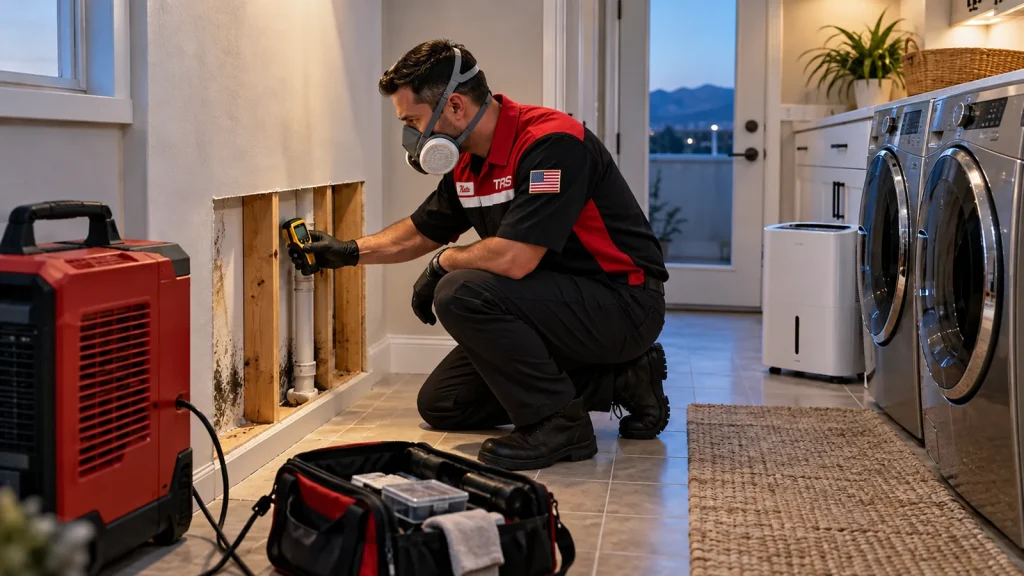
A leak does not have to be dramatic to create a moisture problem. A slow supply-line drip, air-conditioning condensation issue, roof intrusion, or appliance connection can dampen materials behind a cabinet or wall for days before it becomes obvious. If those materials remain wet, mold growth may follow.
Southern Nevada’s dry climate can create a false sense of security. Outdoor air may be dry while moisture stays trapped beneath flooring, behind baseboards, inside insulation, or around plumbing. Preventing mold starts with finding the full extent of the water and drying the affected assembly—not simply drying the visible surface.
Stop the moisture source first
Repair or isolate the cause of the leak before focusing on cosmetic damage. Shut off the affected fixture or main water supply when safe, arrange the appropriate plumbing or building repair, and protect nearby belongings from additional water. If the source continues, cleaning alone cannot solve the problem.
Check beyond the visible stain
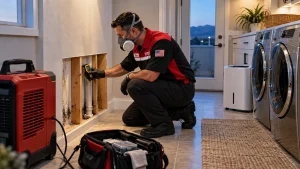
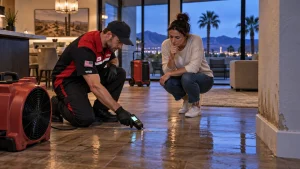
Water follows gravity, framing, seams, and material layers. A small ceiling stain may be connected to a larger wet area above it. Moisture beside a washing machine may have travelled under baseboards or floating flooring. Professional moisture mapping helps determine where drying is needed and whether materials can remain in place.
Pay attention to swelling, peeling paint, soft drywall, cupped flooring, musty odor, condensation, or repeated discoloration. These signs do not confirm the full scope on their own, but they are good reasons to investigate promptly.
Dry wet materials with a plan
Effective drying combines water extraction, air movement, dehumidification, and regular moisture checks. Household fans may move air across the surface but cannot confirm that the inside of a wall or floor system has reached an acceptable level.
A professional drying plan should respond to the size of the affected area, the materials involved, indoor conditions, and whether the water may contain contaminants. Equipment should be placed and monitored intentionally rather than left to run without measurements.
Keep indoor humidity under control
After a leak, avoid adding unnecessary moisture to the area. Keep windows and exterior doors closed when outdoor conditions would interfere with controlled drying. Use the property’s HVAC system only as advised for the situation, and do not switch off professional dehumidification equipment without speaking to the restoration team.
Long-term prevention also includes maintaining air-conditioning drain lines, exhaust fans, roof and window seals, plumbing connections, and appliance hoses. Address recurring condensation instead of treating it as a harmless seasonal condition.
Clean safely and avoid masking the problem
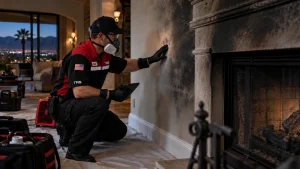
Painting over a stain or spraying fragrance does not correct hidden moisture. Bleach is not a universal solution for porous building materials, and mixing household chemicals can be dangerous. If visible growth is present, if the water source was contaminated, or if a large concealed area may be affected, request a professional evaluation before disturbing materials.
When should you call a restoration professional?
Professional help is appropriate when the leak has affected drywall, insulation, cabinets, carpet padding, wood flooring, or more than one room; when the source is uncertain; when materials stayed wet for an unknown period; or when musty odor or visible growth appears. People with health concerns should avoid the affected area and seek guidance from a qualified medical professional about personal exposure questions.
A practical prevention checklist
- Stop and repair the source of moisture.
- Document the affected rooms and materials.
- Extract standing water promptly.
- Inspect adjacent rooms, wall bases, cabinets, and flooring transitions.
- Use measured drying rather than appearance alone.
- Resolve recurring humidity or condensation conditions.
- Recheck the area after drying and before repairs are closed.
Help for leaks, drying, and mold remediation
Trademark Restoration Services provides water mitigation, moisture inspection, structural drying, and mold remediation support for residential and commercial properties throughout Southern Nevada. If you have discovered a leak or suspect hidden moisture, call (702) 749-9999 to arrange an assessment.